


 Lowest Price Policy^
 +40,000 Products
 2 hour Click & Collect
 Easy in-store Returns
How to grow and care for alstroemeria

What you need to know about alstroemeria
Name: alstroemeria, Peruvian lily, princess lily, Alstroemeria species and varieties.
Height: 75cm with many dwarf forms of around 30cm also available.
Foliage: evergreen.
Climate: cold temperate, warm temperate, arid/semi-arid, sub-tropical and tropical.
Soil: prefers deep, well-drained soil.
Position: full sun or light shade.
Flowering: clusters of trumpet flowers in many colours in spring through to autumn.
Feeding: regular feeding with a balanced, controlled-release fertiliser.
Watering: plants are quite dry tolerant once established. However, they will produce more flowers if given regular water.
Appearance and characteristics of alstroemeria
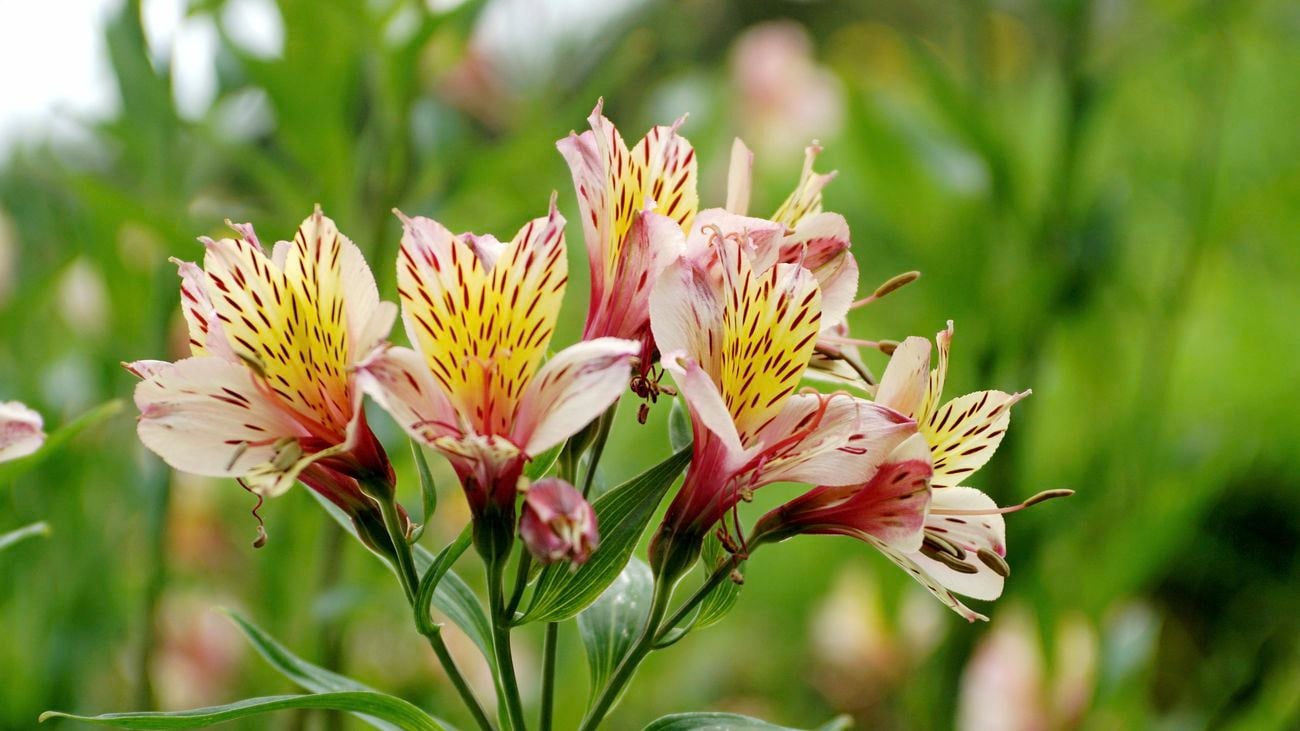
Alstroemeria is an herbaceous perennial that grows up from a fleshy root system and has glossy foliage around the upright stem. Flowers appear on the top of the stem from around spring right through to autumn.
The flowers are lily or orchid-like in that they have many petals and come in a similar array of colours, including cream, yellow, orange, pink and red. They also often feature spots, flecks, stripes and two tones of colours, like lilies.
Uses for alstroemeria
Traditionally, alstroemeria has been used to bring long-term colour to mixed garden beds. However, it can also be used in a line of a single or mixed colours as a border for a garden.
The new smaller growing forms are very good in pots, and as they flower for such a long period, they're great for decorating entrances and outdoor entertaining areas. This means they are also great if you have limited garden space.
Peruvian lilies are particularly good as cut flowers in a vase, as they will last well for several weeks.
How to plant and grow alstroemeria
- Prepare the soil well with organic matter.
- Plant your alstroemeria in full sun or very light shade. In the hottest and driest districts, plant it in dappled shade.
- Water well.
- Tall varieties may need staking if they are in a particularly windy spot.
Pro tip: if growing in a container, use a good-quality potting mix and a container that allows for the plants to expand.
Caring for your alstroemeria
Deadheading
Your alstroemeria won't need a lot of work, but you'll benefit from more flowers if you continuously deadhead your plants. Look for stems that have finished flowering and that are starting to set seedpods. Grab these stems close the ground and pull – the whole thing should come away from the base. Continuous deadheading will mean continuous flowers.
Repotting alstroemerias
Container-grown plants will need re-potting every two years as a minimum. Lift and shake off most of the old potting mix. Either plant into a larger container or divide the clump by gently prising it apart, and then plant the sections into individual containers.
Feeding
To help your alstroemeria produce a constant run of flowers, it is best to feed it. You can do this with a slow-release fertiliser, which should cover the entire flowering period.
Diseases and pests
Another bonus of this long-flowering beauty is that it is rarely troubled by pests or diseases. Keep your eye out for the usual suspects when it comes to insects – aphids, whiteflies and caterpillars – and control with a garden insecticide if necessary.
How to propagate alstroemeria
The Peruvian lily multiplies by division. It's one of those perennials that'll expand over time, and actually needs to be divided if it becomes crowded.
To divide your alstroemeria:
- Wait for the cooler months to dig up the clump.
- Separate into smaller clumps.
- Plant out or pot up what you have left over.
If you like this then try
Lily: grow from a bulb in the garden or container for the showy, scented flowers.
Iris: an easy-to-grow cottage garden favourite.
Lisianthus: one of the longest-lasting of cut flowers.
Start planting today
Check out our huge range of plants now and get your garden growing!


More D.I.Y. Advice


Please make sure you use all equipment appropriately and safely when following the advice in these D.I.Y. videos. You need to be familiar with how to use equipment safely and follow the instructions that came with the equipment. If you are unsure, you may feel it is safest to consult an expert, such as the manufacturer or an expert Bunnings Team Member.
Grave health hazards are linked to asbestos, which may be in homes built up to 1990. Health hazards may result from exposure to lead-based paints in older materials and copper chromium arsenic (CCA) treated timber. For information on the dangers of asbestos, lead-based paint and CCA treated timber and tips for dealing with these materials contact your local council's Environmental Health Officer.