


 Lowest Price Policy^
 Free delivery* with
 4 hour Click & Collect
 Easy in-store Returns
How to grow and care for air plants

What you need to know about air plants
Name: air plant, Tillandsia spp.
Height/length: 0.1m-6m, depending on variety.
Plant type: epiphytic bromeliad, perennial.
Climate: warm, frost-free.
Soil: none – their roots cling to rocks or tree branches for support. They can also be freestanding.
Position: filtered light to full sun, depending on the species.
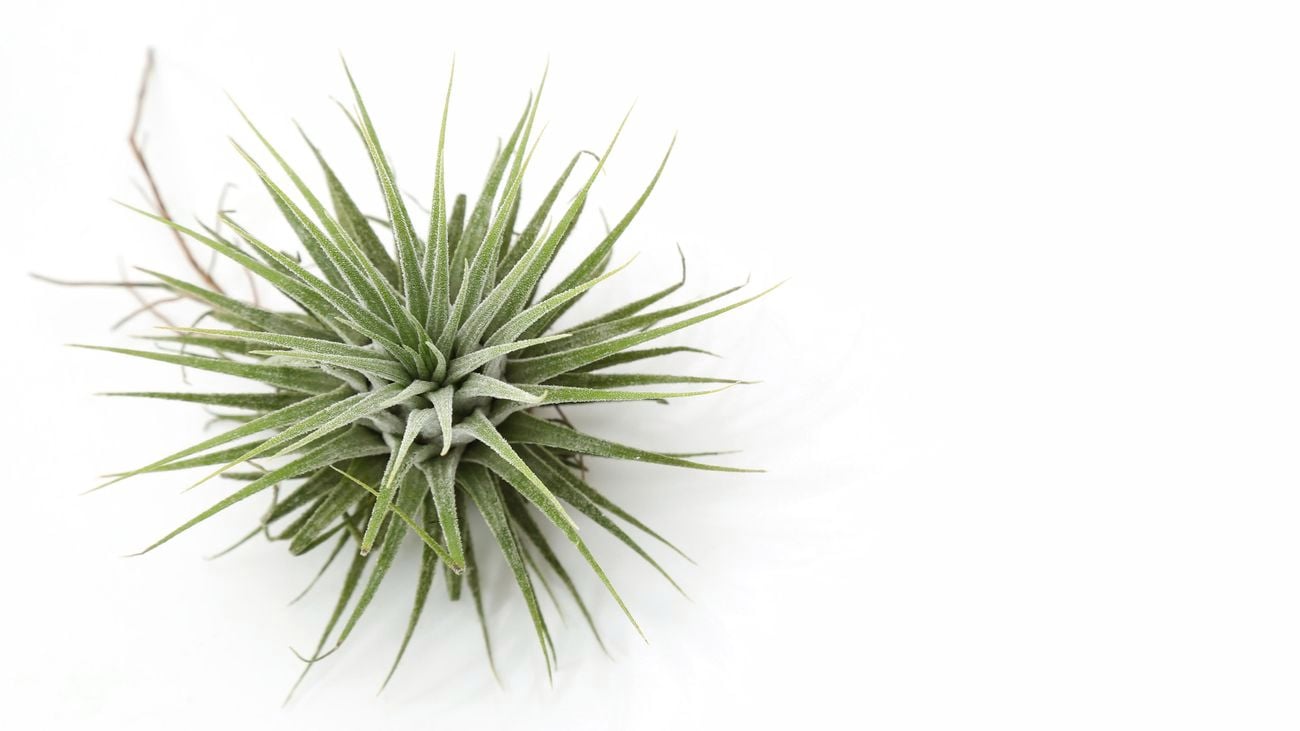
Foliage: slender, narrow or flat leaves that may be smooth or covered with fine hairs (trichomes); mostly green, but the more hairy the foliage, the more silvery the appearance.
Flowering and fruiting: small tubular, funnel-shaped pink, red, purple, yellow, orange or white flowers.
Feeding: mist-spray fortnightly during warmer months with a weak organic liquid fertiliser (diluted to one-quarter strength).
Watering: submerge in water once a week, less in winter. Mist-spray every few days in hot/dry conditions.
Appearance and characteristics of air plants
Air plant is a broad term used to describe the species in the Tillandsia genus. There are more than 600 species of air plant and they vary in appearance, shape and size. They’re all epiphytes so, in their natural environment, they’re found growing on trees or rocks. Their roots cling to the branches for structural support, and they draw all their nutrients and water through the trichomes on their leaves.
Air plants don’t need structural support to grow. They develop small roots if the base of the plant is in direct contact with a suitable substrate, but they can survive happily as freestanding specimens, too. Most are well adapted to growing indoors.
Air plants with silvery leaves (like T. xerographica and T. streptophylla) have evolved to grow in dry conditions and bright light, whereas those with smooth green leaves (like T. butzii and T. bulbosa) prefer filtered light and medium-high humidity.
Decorating with air plants
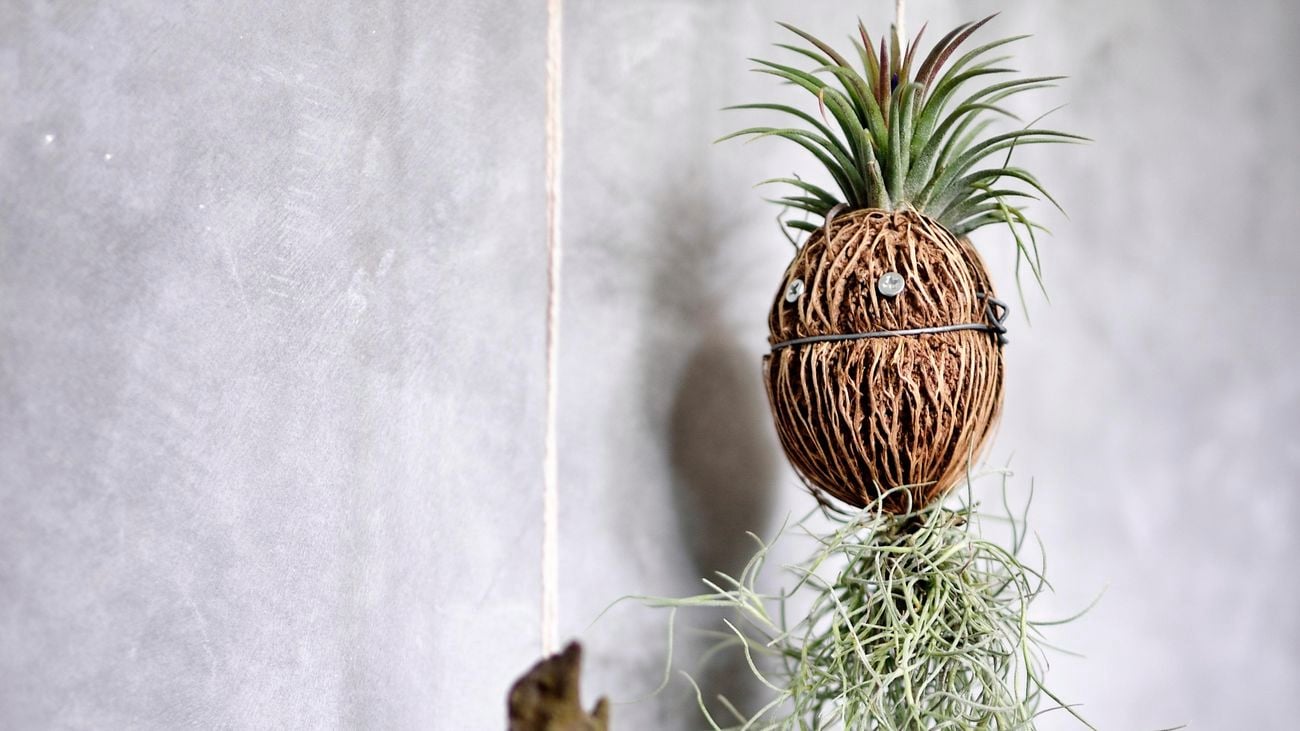
You can get creative with air plants. Display them in open terrariums, placed on a decorative dish, cradled in a macramé hanger, glued to crystals or geodes, attached to a piece of driftwood or suspended on strings. Outdoors, air plants look great nestled in the crooks of tree branches or attached to small pieces of timber. You often see the long, silvery stems of Spanish moss, or old man’s beard (T. usneoides), hanging from trees.
How to grow air plants
Air plants are native to deserts, swamps and tropical rainforests, but they can be grown indoors or outside in warm, frost-free environments. Most air plants prefer a spot in bright, filtered light. Avoid hot locations, as the plants will dry out quickly and you will need to water them more often.
Caring for air plants
Air plants need minimal care. Clumps can be divided and propagated every few years, but this is not necessary and they can be decorative if left as a large mass. Remove dead or brown leaves with a gentle pull. Alternatively, use secateurs to keep the plant tidy.
How often should you water and feed air plants?
As a general rule, water air plants weekly in summer. Those with furry silver leaves are more tolerant of dry conditions, but will appreciate a regular watering, especially during extended dry periods. In winter, reduce watering frequency to once every few weeks. To water, submerge the entire plant in a sink or bucket of water for half an hour before turning it upside down to allow any excess water to drain. Place it on a towel to let it completely dry.
Tip: Use a fan to help with drying, especially if you have a large collection.
Feed air plants during spring and summer with a weak solution of an organic liquid fertiliser. Dilute to one-quarter of the usual strength and spray every fortnight.
Diseases and pests that affect air plants
Air plants are generally not affected by pests or disease. However, they can be prone to rot if water is left in the central ‘vase’ of the plant, where the bases of the leaves come together. To reduce the risk of this, turn plants upside down after watering to get rid of any excess moisture.
How to propagate air plants
Air plants can only be propagated by seeds or division of offsets. They cannot be propagated by cuttings.
Seed pods rarely occur at home or in the garden unless flowers appear and they are given a hand with pollination. It’s a long, tedious process, with plants taking 10 years to reach maturity. The easiest way to propagate air plants is by division. Baby plants, or ‘pups’, form at the base of the mother plant and can be separated with a sharp knife or secateurs.
If you like this, then try
Cast-iron plant: a hardy and attractive perennial with deep-green leaves.
Chinese money plant: an evergreen indoor plant with saucer-like foliage on arborescent stems.
Devil’s ivy: a handsome climbing or trailing plant with green or variegated green and yellow leaves.
Start planting today
Check out our huge range of plants now and get your garden growing!
Photo credit: Getty Images


More D.I.Y. Advice


Please make sure you use all equipment appropriately and safely when following the advice in these D.I.Y. videos. You need to be familiar with how to use equipment safely and follow the instructions that came with the equipment. If you are unsure, you may feel it is safest to consult an expert, such as the manufacturer or an expert Bunnings Team Member.
Grave health hazards are linked to asbestos, which may be in homes built up to 1990. Health hazards may result from exposure to lead-based paints in older materials and copper chromium arsenic (CCA) treated timber. For information on the dangers of asbestos, lead-based paint and CCA treated timber and tips for dealing with these materials contact your local council's Environmental Health Officer.