


 Lowest Price Policy^
 +40,000 Products
 2 hour Click & Collect
 Easy in-store Returns
How to grow and care for a lemon tree

How to grow and care for a lemon tree
What you need to know about a lemon tree
Name: lemon (Citrus limon cvs.).
Plant type: evergreen, small to medium tree.
Height: 3–6m, but height generally controlled by pruning. Dwarf varieties are available, which are ideal for growing in pots.
Foliage: oval-shaped with a pointed end. Deep green, slightly glossy, aromatic if crushed, often finely toothed on the edges.
Climate: all zones except arid, and only in milder areas of semi-arid.
Soil: ideally, fertile and well-drained soil, but tolerant of a range of soil types.
Position: best in full sun. Must be protected from strong winds.
Flowering and fruiting: flowers, small, white and strongly perfumed, mainly appear from spring through summer. Fruit is seen much of the year.
Feeding: requires regular feeding.
Watering: moderately drought-tolerant but needs water during extended dry periods. Ensure adequate water supply when flowering to promote good fruit set.
Appearance and characteristics of a lemon tree
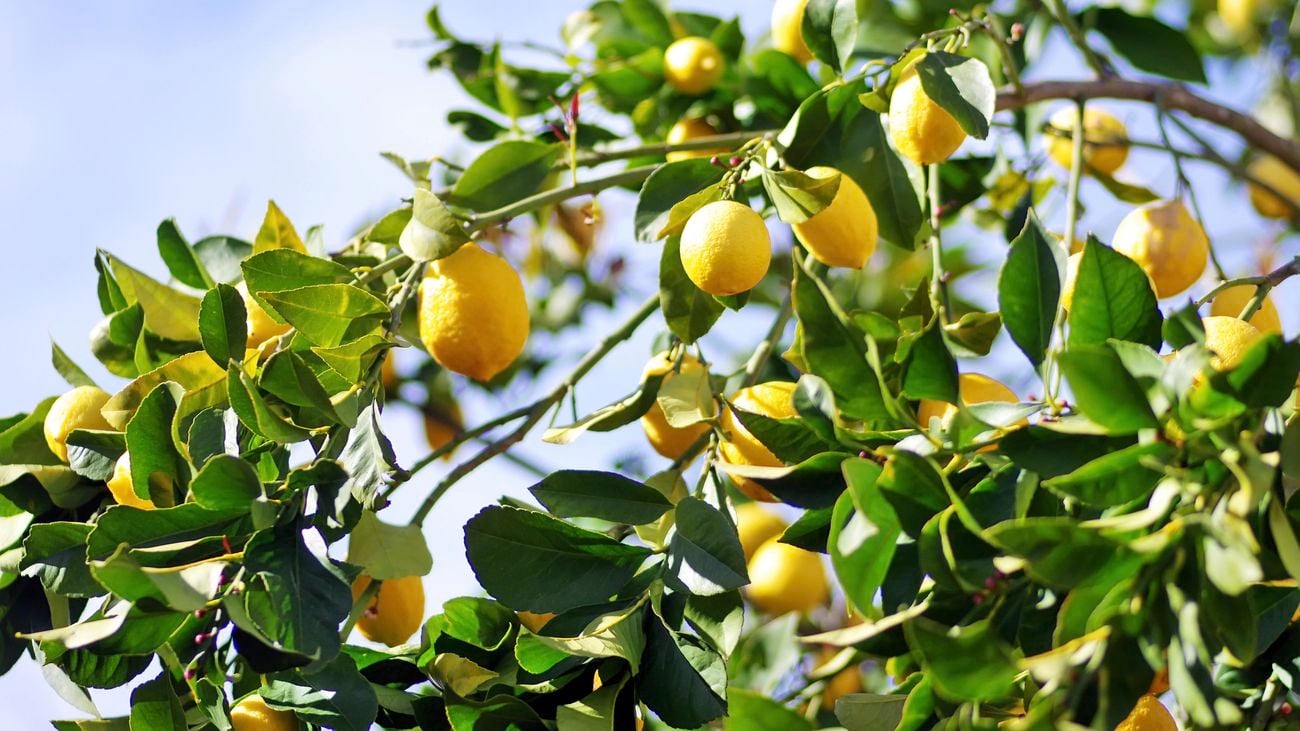
Many people will think of of a lemon tree as a gnarled old thorny bush-lemon down the back of nan's yard. You know the one. You generally backed into the thorns while trying to catch a footy. Well, the lemon tree you plant today will be a very different beast, and can in fact become an enormous landscape asset. They make great-looking trees as a feature planting, and as a bonus you get lemons for juicing, eating and cooking. Some lemon varieties will also perform exceptionally well in pots.
A small tree with lovely deep green foliage, lemons are very easy care when planted in the right place. They naturally develop a neat crown without much need for pruning.
The trunk tends to be stout with age, and branching will generally start from low down, unless you've intentionally lifted the canopy through under-pruning.
In the right location and climate your lemon tree will flower on and off throughout the year. Fruit can be left on the tree to “store” after it reaches a ripe point – this means a tree can be carrying fruit for much of the year.
Uses of lemon trees
A lemon tree is a fabulous addition to any garden, and offers a variety of uses:
- Generally planted for its fruit.
- Flower fragrance is superb, so position your tree where the scent can be enjoyed.
- Very useful garden feature tree, as it has good form and foliage.
- Selected dwarf varieties and Meyer grow well in large pots.
- Excellent choice for creating espaliers, where a tree or shrub is trained flat against a wall or screen.
How to plant and grow a lemon tree
Your lemon tree will perform best in full sun. It can tolerate some shade, but this will reduce fruiting. It will be equally at home in dry or humid areas.
The ideal soil is a rich, well-drained loam, however the lemon tree is adaptable to almost any soil type, except heavy clay. It will survive soil that occasionally becomes over-wet, but not extended waterlogging. In heavy clay or areas where the tree may become waterlogged, plant on a raised mound or in a raised garden bed.
Your tree must be protected from strong winds, as leaves can easily be stripped from a tree. Although they can tolerate some cold, anything around –5°C will kill the leaves and may kill the wood. Flowers and young fruit will be killed at around –1°C.
How to plant a lemon tree
For the best performance, improve the soil before planting your lemon tree. Blend through composted manure or quality compost before planting, then add a controlled-release fertiliser at planting time, both in the hole and on the surface. Larger trees may require staking until established.
Caring for a lemon tree
Follow these tips to get the best out of your lemon tree:
- Grafted trees should fruit well within three years. For the first two years, remove any fruit that starts to develop, as it can over-stress the plant, and the branches may not be strong enough to support its weight.
- Lemons are always hungry – they need a lot to eat. Feed them at the start of spring, summer and autumn. Use a controlled-release fertiliser especially formulated for citrus or fruit trees.
- Keep your tree well mulched with a quality mulch, such as lucerne or pea straw. These break down relatively quickly, adding nutrients and organic matter to the soil.
How to prune a lemon tree
A lemon tree requires very little pruning – simply prune as needed to restrict height or width. If the centre of the tree becomes congested, or you find any crossing branches, these can be pruned out as needed. Light trimming can encourage bushiness.
Diseases and pests affecting lemon trees
Lemons, and in fact all citrus trees, are prone to a number of pest and disease problems, such as those listed below. Identify your problem and talk with the plant specialist in your local nursery for advice on the best solutions.
- Citrus leaf miner: seen as silver trails on the leaf surface, this small grub tunnels between the leaf layers.
- Various scales: these appear as small brown, black, white, or even pink lumps that can be squashed. They may be on the leaves, stem or trunk, and sometimes on the fruit. They suck the sap, damaging fruit and leaves and affecting plant health.
- Bronze orange or stink bugs: these start life small and bright green, then change to bright orange before maturing to a bronze-brown. They squirt stinky caustic liquid when disturbed, and suck sap from young shoots, killing them.
- Caterpillar or large citrus butterfly: ultimately, this is a big caterpillar, bright green with “horns” along its body. When disturbed, it pops bright smelly horns out of its head. It will eat the leaves voraciously.
- Fruit fly: a tiny little fly that's recognisable by the back and forth motion of its wings as it walks around on the fruit. It “stings” fruit to lay eggs, and the resulting maggots render the fruit inedible.
- Aphids: tiny sap-suckers that appear en masse on new shoots and damage them. Their droppings, known as honeydew, leave a sticky film on the leaves. Watch out for ants that may transport aphids and other sap-sucking insects up the tree.
- Sooty mould: this grows on the honeydew residue left by sap-sucking insects.
Lemon tree propagation
Lemon trees can be grown from cuttings from spring to early summer:
- First, take a six-inch cutting with no fruit or flowers. Your cutting must have at least two or three nodes where leaves emerge along the stem, and show no signs of disease, damage or stress. Using sanitised secateurs, cut the base at a 90-degree angle and cut the top to a 45-degree angle to assist with water run-off.
- Remove all leaves except for four leaves at the tip, and dust the bottom with rooting hormone powder.
- Pot your cutting in a well-drained pot filled with sterile seed-starting mix, and keep it warm and humid. You can cover the pot with a large clear plastic bag, prop the bag up with wires or stakes and make a couple of holes to let the air flow.
- Make sure your cutting is warm (20–25°C) and moist, but let the surface dry out between waterings. Lemon cuttings need bright, diffuse sunlight, but direct sunlight can cause them stress.
Safety tip
If using products to deal with pests, diseases or weeds, always read the label, follow the instructions carefully and wear suitable protective equipment. Store all garden chemicals out of the reach of children and pets.
If you like this then try
How to plant a tree: all the tips you need for preparing the soil for larger plants.
Fig: perfect for gardens and pots, figs are easy and rewarding.
Mango: a larger fruit tree, perfect for warmer zones.
Start planting today
Check out our huge range of plants now and get your garden growing!


More D.I.Y. Advice


Please make sure you use all equipment appropriately and safely when following the advice in these D.I.Y. videos. You need to be familiar with how to use equipment safely and follow the instructions that came with the equipment. If you are unsure, you may feel it is safest to consult an expert, such as the manufacturer or an expert Bunnings Team Member.
Grave health hazards are linked to asbestos, which may be in homes built up to 1990. Health hazards may result from exposure to lead-based paints in older materials and copper chromium arsenic (CCA) treated timber. For information on the dangers of asbestos, lead-based paint and CCA treated timber and tips for dealing with these materials contact your local council's Environmental Health Officer.