


 Lowest Price Policy^
 +40,000 Products
 2 hour Click & Collect
 Easy in-store Returns
How to grow an almond tree

What you need to know about almonds
Name: almond (Prunus dulcis).
Height: 2–3m if pruned, 6–9m unpruned.
Foliage: deciduous.
Climate: prefers cold temperate climates but will grow in warm temperate and arid/semi-arid areas, producing nuts if conditions meet winter chill requirements (300+ hours below 7°C).
Soil: well-drained soil, enriched with compost and decomposed manure.
Position: full sun, protected from strong winds.
Flowering and fruiting: white blossoms decorate the tree in late winter and early spring, followed by nuts ,which are usually ready to harvest in early autumn.
Feeding: apply a fertiliser suited to fruit trees in autumn and spring at the rate prescribed on the packet.
Watering: although drought tolerant, regular watering is required from flowering until harvest, but only if you want a delicious and abundant harvest of nuts.
Appearance and characteristics of an almond tree
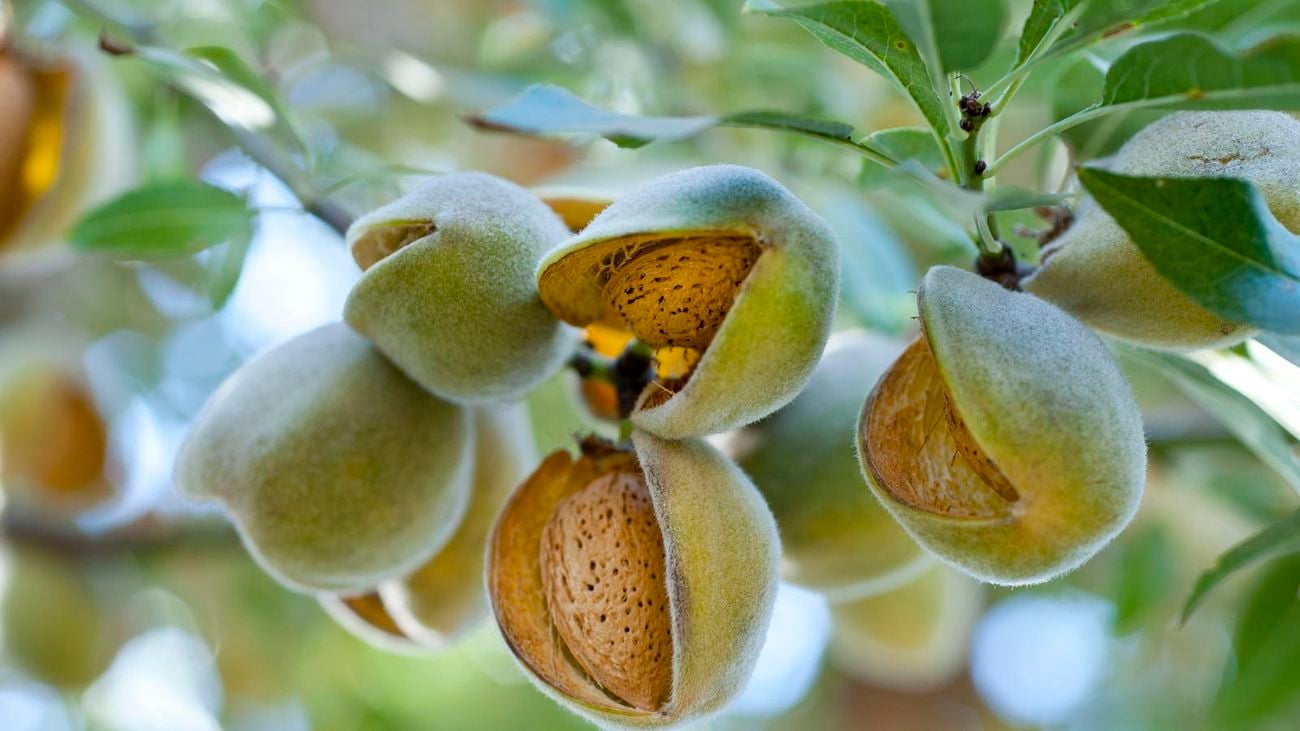
Once established, the almond is a prolific nut tree with a lovely, naturally rounded framework and deciduous foliage. Ornamental and edible, an almond is a wonderful tree for gardens of all sizes, producing white cherry blossoms in late winter and early spring, while the felty nut shells adorn the tree like ornaments until early autumn, when they crack open to reveal the nuts, hidden inside a secondary shell.
Uses for an almond tree
The almond tree is primarily grown for its nuts, which can be eaten as they are or used to create almond oil and almond milk. But they also make a nice addition to any garden because of their drought tolerance and striking floral display.
How to plant and grow an almond tree
Almonds are usually planted as bare root trees in winter.
- Unwrap the tree roots and soak in a bucket of diluted seaweed solution for at least 30 minutes prior to planting.
- Dig a hole at least 40cm wide and 30cm deep, backfilling a mound in the centre of the hole.
- Check the height of the tree in the hole—it should be planted at the same height as the mark on the stem, or only 1–2cm deeper.
- Fan the roots out around the hole and down the mound.
- Backfill with soil and firm down to remove any air pockets around the roots.
- Apply an organic mulch like pea straw or sugarcane to prevent weeds.
- Stake to stabilise the tree during root development. Insert two stakes; one either side of the tree, about 1m apart. Use hessian tie or organic twine to hold the tree by weaving a figure-8 pattern from the tree to the stakes and back. This will allow your almond to move a little in the wind, but will still support the tree as it develops its root system.
Caring for the almond tree
An almond tree can be a little tricky to establish, as it can sulk when first planted. If this happens, water during hot dry spells and hopefully your tree will shoot next spring. You can check that your tree is still alive, even if it is not shooting, by using your fingernail to scrape a little patch of bark off the trunk. If it is green underneath, your tree is alive, but dormant.
Frost during flowering can impact cropping, so select a protected position and spray with a seaweed solution to improve frost resistance and plant vigour.
Birds and possums can quickly decimate your nut crop. To prevent this, net the tree as nuts start to develop. Use a frame to keep the net from damaging your tree.
Regular watering is required from flowering through to harvest to ensure a good crop of almonds. If trees are allowed to dry out for too long, nuts will be small and unpalatable.
How and when to prune an almond tree
- An almond tree should be pruned in a similar way to a peach or nectarine, to an open-vase shape.
- The tree should have 3–5 main branches spreading out from all sides of the trunk.
- Remove unwanted growth crossing branches or dead wood in winter, always maintaining an open shape.
Diseases and pests
An almond tree is susceptible to peach pests and fungal diseases. Spray for peach leaf curl and shot hole in autumn and again at budburst using a copper-based spray. Fungal problems can decimate your crop. Prune to maintain an open habit and to improve light penetration and airflow.
How to propagate an almond tree
An almond tree is usually propagated through budding. Budding is a process where an almond bud is inserted into the rootstock of another tree, usually a stone fruit such as a peach, plum, apricot or almond. This is an advanced method of propagation and involves removing the bud from an existing almond tree and inserting it into a “T” slice in the bark of the rootstock tree.
Safety tip
If using products to deal with pests, diseases or weeds, always read the label, follow the instructions carefully and wear suitable protective equipment. Store all garden chemicals out of the reach of children and pets.
If you like this then try
Peach: the closest relative to the almond.
Dwarf fruit trees: perfect for gardens of all sizes.
Lemons: our favourite of all the fruit trees.
Start planting today
Check out our huge range of plants now and get your garden growing!


More D.I.Y. Advice


Please make sure you use all equipment appropriately and safely when following the advice in these D.I.Y. videos. You need to be familiar with how to use equipment safely and follow the instructions that came with the equipment. If you are unsure, you may feel it is safest to consult an expert, such as the manufacturer or an expert Bunnings Team Member.
Grave health hazards are linked to asbestos, which may be in homes built up to 1990. Health hazards may result from exposure to lead-based paints in older materials and copper chromium arsenic (CCA) treated timber. For information on the dangers of asbestos, lead-based paint and CCA treated timber and tips for dealing with these materials contact your local council's Environmental Health Officer.