


 Lowest Price Policy^
 Spend & Earn Rewards
 2 hour Click & Collect
 Easy in-store Returns

Key takeaways: Full sun plants that love the heat
- Full sun means a spot that gets at least six hours of direct sun a day, and these plants are suited to hot, exposed areas like west-facing courtyards and balconies.
- Heat-tolerant doesn't mean no water – new plants need regular watering until their roots are established, usually through their first summer.
- Pots and hanging baskets dry out faster than garden beds, so small pots need watering at least twice a week in hot weather, and possibly every day during a heatwave.
- The right potting mix matters: Australian natives like banksias need a low-phosphorus mix, while succulents need a free-draining cacti and succulent mix.
- Always wear gloves and a mask when handling potting mix, as it can carry harmful bacteria and fungi.
Sun seekers
Hot and dry conditions are tough on plants, especially those in pots and hanging baskets, which dry out faster than those in beds. This challenge is greater for west-facing locations, where the afternoon sun is relentless. But there are many full-sun plants that thrive in these conditions, enduring high temperatures and minimal watering – once established – while maintaining their good looks. A full-sun spot is one that gets at least six hours of direct sun a day. Here are our top plants for full sun that can handle the heat.
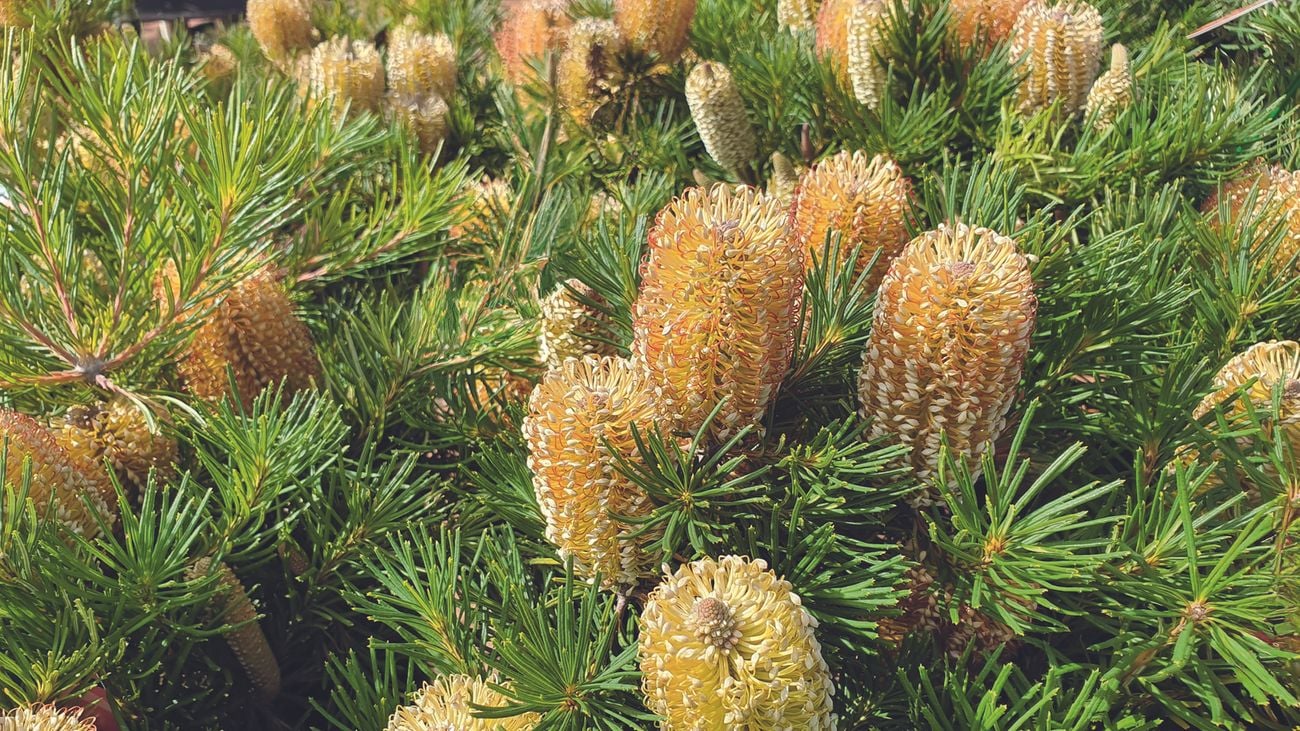
Banksia ‘birthday candles’ (Banksia spinulosa)
An attractive, compact low-growing Australian native shrub with narrow leaves and large gold-bronze flower spikes in autumn and winter. Grow in a low-phosphorus potting mix suited to Australian natives, as banksias are sensitive to phosphorus, and deadhead (remove spent flowers) to keep it tidy.
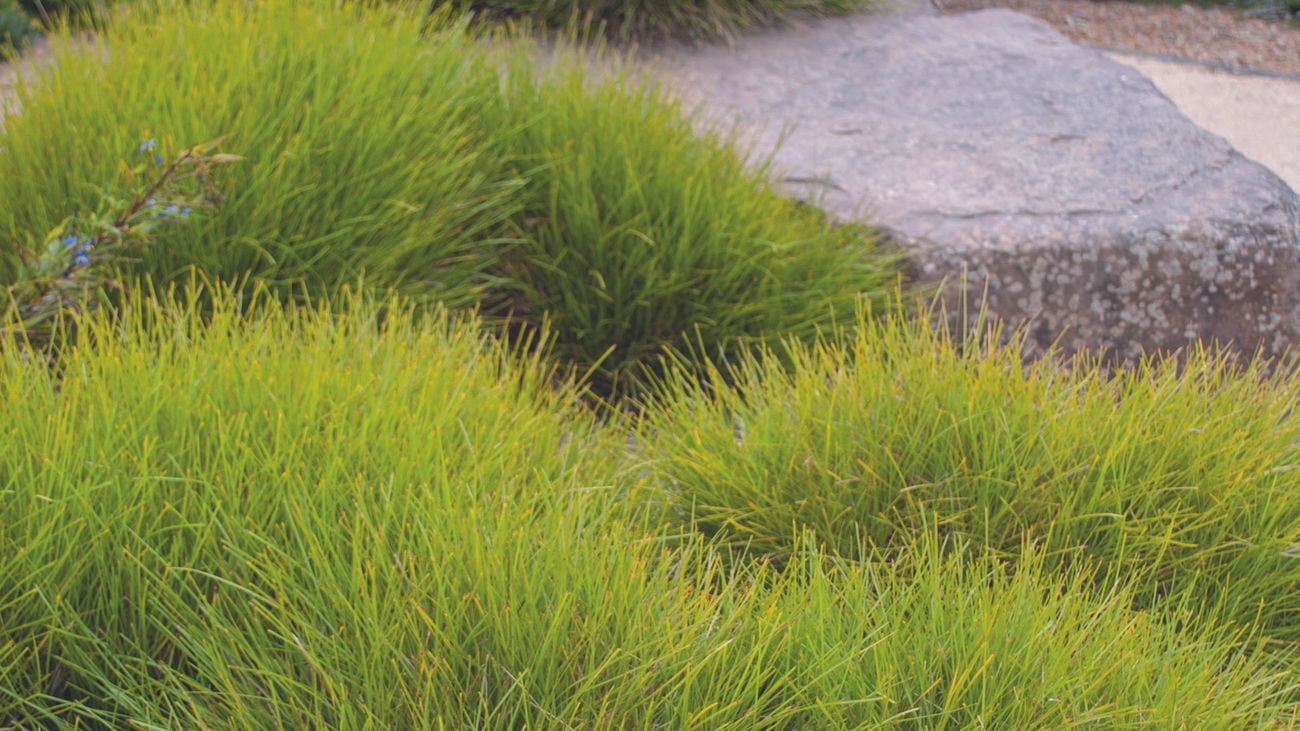
Lomandra (Lomandra spp.)
These Australian native grasses grow into dense clumps of strappy green foliage and vary in height from 30cm to 1.2m, depending on the variety. Tolerant of coastal conditions, they can be trimmed back if becoming unruly.
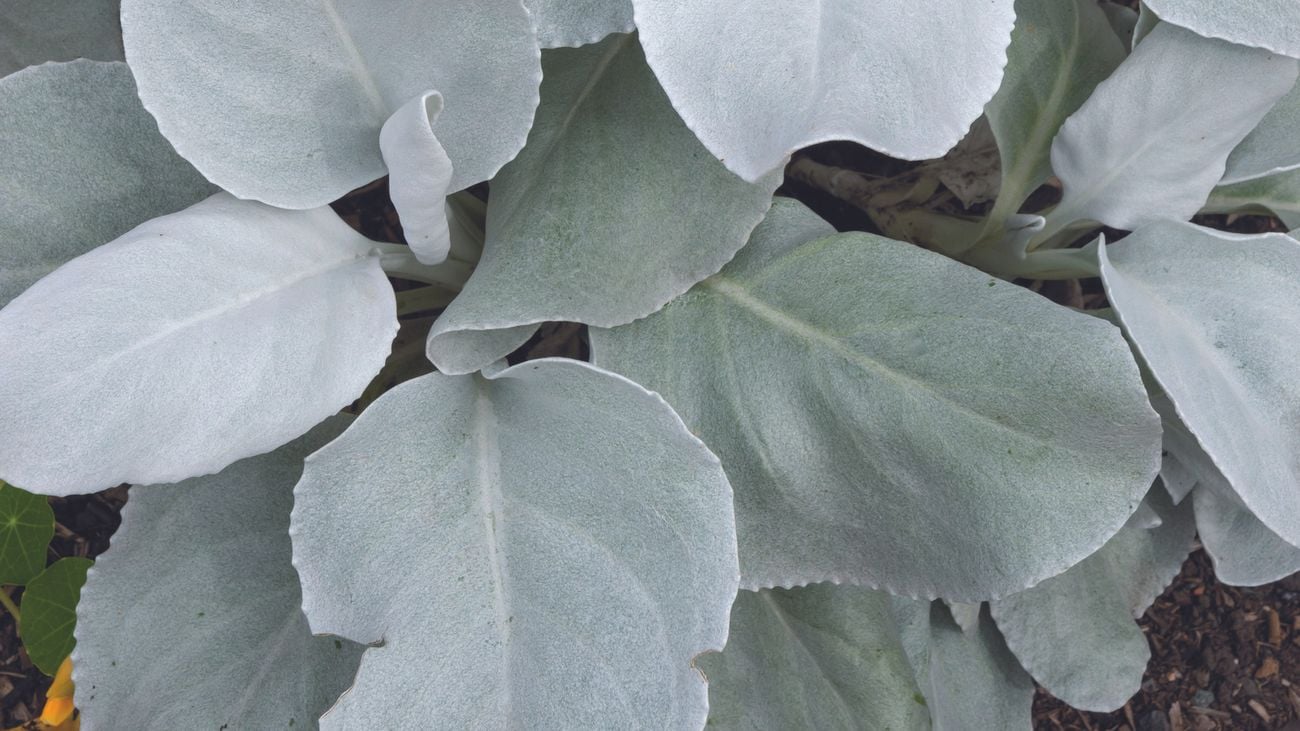
Angel wings (Senecio candicans)
Large velvety silvery-white leaves make this heat-tolerant succulent a standout feature. Contrast with purple or green foliage for an eye-catching display. Ensure soil is free-draining or use a cacti and succulent potting mix.
Coastal rosemary (Westringia fruticosa)
An evergreen Australian native shrub with small grey-green, rosemary-like leaves and masses of white, blue-mauve or purple flowers through spring. Naturally forms a loose mound but can be clipped into a formal topiary ball.
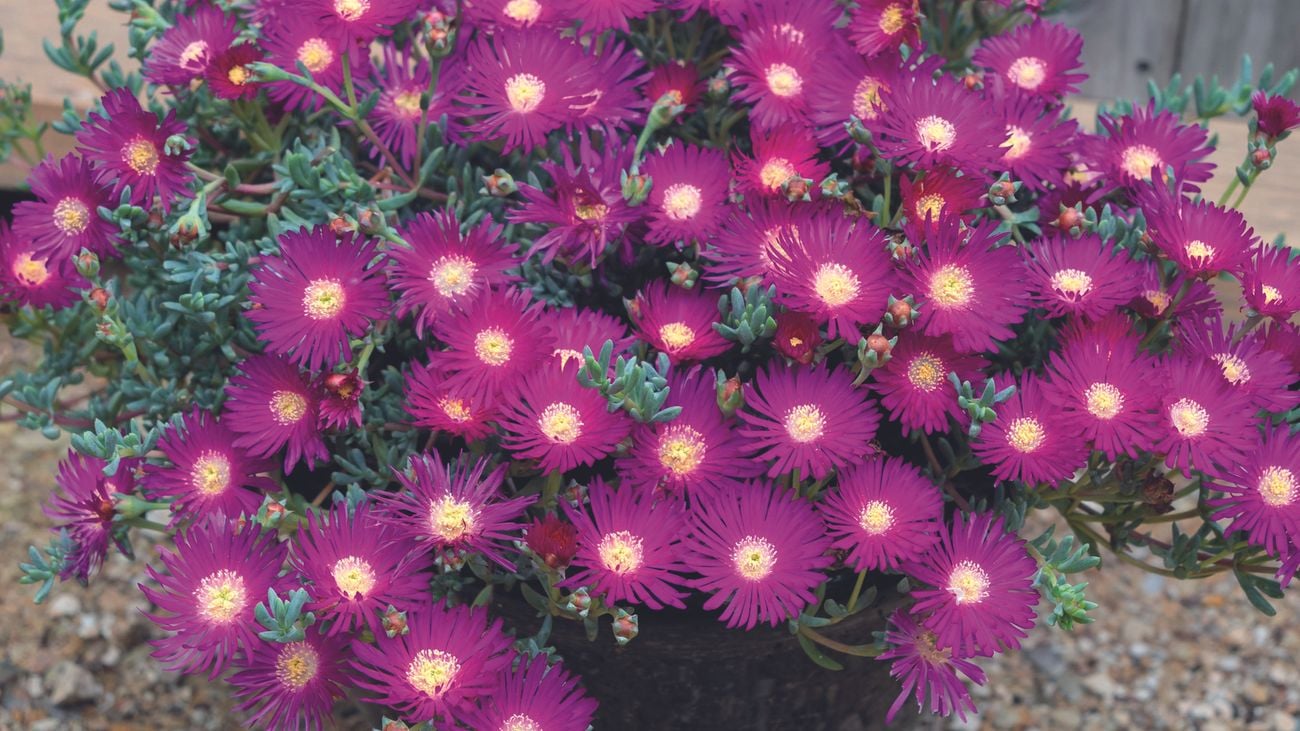
Trailing ice plant (Lampranthus spectabilis)
This succulent has slender fleshy leaves covered with a prolific display of red to pink flowers and white daisy-like blooms from spring to summer. It will quickly fill a pot and trail over the sides.
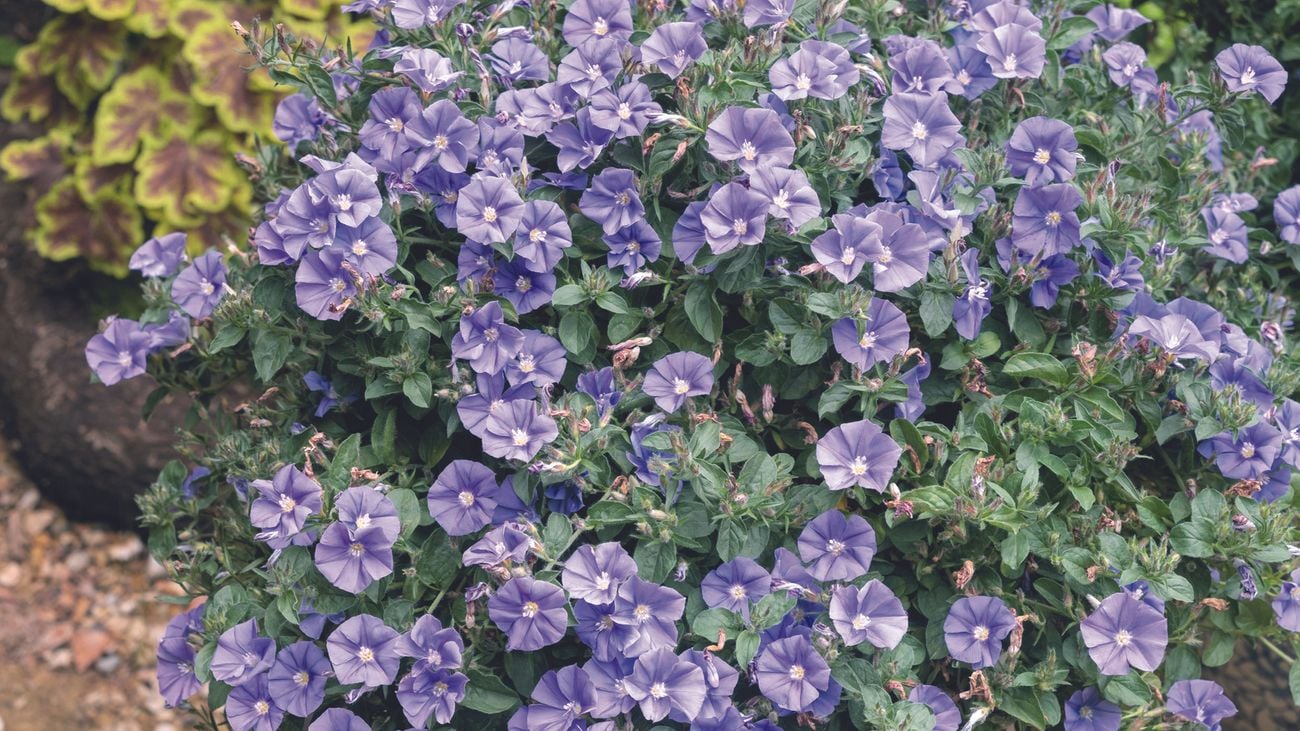
Convolvulus (Convolvulus spp.)
A sprawling groundcover plant with small green foliage and a profusion of white or purple flowers in spring and summer. This full sun plant looks superb cascading out of pots and hanging baskets, over rockeries or on flat ground.
Strawflower (Xerochrysum bracteatum)
A fast-growing Australian native groundcover with masses of vibrant blooms in white, yellow, and shades of pink, red and orange with golden centres. Plant out in pots or hanging baskets in a potting mix suited to Australian natives.

Caring for full sun plants in pots
Safety tip: Always wear gloves and a mask when handling potting mix, mulch and compost.
Apply a naturally derived mulch, like pine bark or pea straw, to pots to help insulate the potting mix. Water during cooler parts of the day, such as the morning or evening. This will reduce water loss through evaporation. Grouping small pots together can also create a cool microclimate around the plants. If a heat event is expected, shade leafy greens and vulnerable plants with a large umbrella (make sure it's securely anchored) to diffuse the heat and stop soil drying out.
Get water smart
If you're a forgetful gardener or will be away for a couple of weeks, horticulturist Melissa King of Scotts Osmocote advises using self-watering containers, which have a built-in reservoir. "As long as there is ample water in the reservoir, plants can access water as they need it, so there's no need to constantly monitor their watering needs," says Melissa. Note that smaller pots and baskets need watering at least twice a week in hot weather, as they hold less potting mix. During a heatwave, check them daily.
Get your garden ready for the heat
Once you’ve chosen your plants, give them the best chance of a great summer with our guide to protecting your garden against heat stress, including how to use shade cloth, mulch and deep watering before the hottest days arrive.
Photo credit: GAP Photos/Friedrich Strauss and Getty Images
Frequently asked questions
How often should I water full sun plants in pots during summer?
Water small pots and hanging baskets at least twice a week in hot weather and check them every day during a heatwave. To tell whether a pot needs water, push your finger into the potting mix up to the first knuckle. If it's dry at that depth, water slowly until it drains out the bottom. New plants need more regular watering than established ones, even if they're labelled heat- or drought-tolerant.
Do banksias and other Australian natives need a special potting mix?
Yes. Banksias are sensitive to phosphorus, so plant them in a low-phosphorus potting mix suited to Australian natives and avoid general-purpose fertilisers. A standard potting mix can contain enough phosphorus to damage them. Our guide to potting mixes explains which mix suits which plants.
How can I tell if a plant in full sun is getting too much heat?
Wilting is usually the first sign of heat stress. Most plants recover after a deep watering, but if the potting mix is left to dry out completely, leaves can brown and scorch. If a potted plant keeps wilting every afternoon even after a good morning water, move it somewhere that gets some afternoon shade during the hottest weeks.
Will heat-loving plants survive a New Zealand winter?
It depends on the plant and where you live. Check the plant label for frost tolerance before you buy, especially if your area gets hard frosts. Plants in pots are easier to protect, because you can move them under eaves or somewhere more sheltered when frosts are forecast.
Are there New Zealand native plants that cope with full sun?
Many New Zealand native plants thrive in full sun, including certain native grasses, smaller-leaved coprosmas, libertia, harakeke (New Zealand flax) and lancewood. Some are also drought-tolerant once established, making them good options for hot, dry spots. Check the growing requirements of individual species before planting.


 Get Inspired
 Ask Questions
 Share Projects