


 Lowest Price Policy^
 Free delivery* with
 4 hour Click & Collect
 Easy in-store Returns
How to create a sensory garden
By
![Two lemon trees in pots in front of a slatted timber screen with a green, leafy hedge to the side]](https://media.bunnings.com.au/api/public/content/356f679116b54372ad3c9a70dfb71522?v=73142fd6&t=w1100dpr2)
Appeal to all five of your senses with a vibrant sensory garden.
Small or large, green spaces provide us with many benefits, including areas to entertain, relax, play and learn. And every plant-filled place is, to some degree, a ‘sensory’ one thanks to its colours, textures, perfumes and various sounds. A true sensory garden, however, intentionally includes elements to nurture, nourish and engage the five senses. Here are our ideas for a sensory garden that’s just right for you.
Tip: Always wear the appropriate safety equipment (safety glasses, gloves, ear muffs and a mask, for example) and always follow the instructions for the product or equipment.
How a sensory garden can be therapeutic
Sensory elements are increasingly being used in public areas as an integral part of therapeutic gardens. Landscape designer Xanthe White of Xanthe White Design says a therapeutic garden helps us to regain our senses and natural connections through touch, smell, sight and sound. “This has been proven to have benefits for a range of health challenges, both in mental health and rehabilitation from illness,” she says. “It helps brains create positive pathways, assisting mindfulness and general wellbeing.”
Spaces designed in this way help to reinforce what experts call ‘sensory integration’. This is a natural process that helps us understand the spaces, and the greater world, around us. Sometimes the senses can be out of balance, de-sensitised or hyper-sensitive. So, it’s important to understand the needs of who will be using the garden. For example, a garden used by an elderly person who has memory-related issues could include ‘memory trigger’ plants. Smell is our most primal sense, connecting directly to the area of the brain responsible for basic emotions and instincts. So the right scents can trigger deep memories and emotions – something as simple as the perfume of a rose or the smell of a newly mown lawn can bring back welcome waves of memories. Conversely, neurodivergent people, particularly those on the autism spectrum, can be overstimulated by a range of elements.
Consider who will be visiting the garden and plan its layout, access, colours and sounds accordingly. There’s a world of plants out there waiting to meet every sensory need.

1. Smell
A fragrance has an incredible capacity to linger in the mind, allowing not just recall but creating new, special moments. Perfumed flowers are the best way to add waves of fragrance in a garden. Ideally, select plants that flower at different times so the aromas don’t clash. “Plants such as gardenia, star jasmine, roses, daphne and frangipani are good for airborne scents,” suggests Xanthe.
However, blooms aren’t the only fragrance source. Plants with oil-rich leaves, such as scented geraniums, lavender and rosemary, will release their scent when you brush against them, so position them close to pathways.
“A range of smells is really beneficial when making key neural connections in the mind, so try to choose a variety of scents,” she advises.
2. Sight
Plants offer many rich foliage colours. The colour palette of green shades alone is enormous, but plants can also deliver burgundy hues, greys, blues and silvers, as well as variegated foliage with stripes or spots. All can be used to delight the eye, drawing attention to different areas. And don’t forget deciduous trees, such as the Japanese maple, that change colour along with the seasons.
As well as foliage colour, plants can provide visual texture. The leaves of the tractor seat plant (Ligularia reniformis) are round and glossy, the native shrubby tororaro (Muehlenbeckia astonii) has an airy look and can be clipped into a hedge or topiary shapes, and the soft shape of cushion bush (Scleranthus biflorus) looks great around rockeries.
Then, of course, there are flowering plants. Selecting plants that flower across different seasons means there’s always something to enjoy. Choose a colour range that works for you – whites, blues and soft pastels tend to be soothing while vibrant colours are mentally stimulating.
3. Touch
Passing a hand over a petal or leaf can be grounding, so place plants you can touch in easy reach, perhaps near a door or gate. Select plants with different textures on leaf surfaces and edges – close your eyes so you focus on feeling them. “A variety of plants is important in a sensory garden to increase the spectrum of the experience,” explains Xanthe. “Lamb’s ear, for instance, is very soft and fluffy, an aloe will be smooth and spiky without being too sharp and an echeveria can have an interesting ripple and shape to feel.” Low buxus hedges can be patted, while plants with long, slender foliage are lovely to touch. “You can also think about the texture underfoot,” Xanthe says. “A range of mediums such as mulch, gravel and sand can give places for us to reconnect with sensation in the feet.”
4. Taste
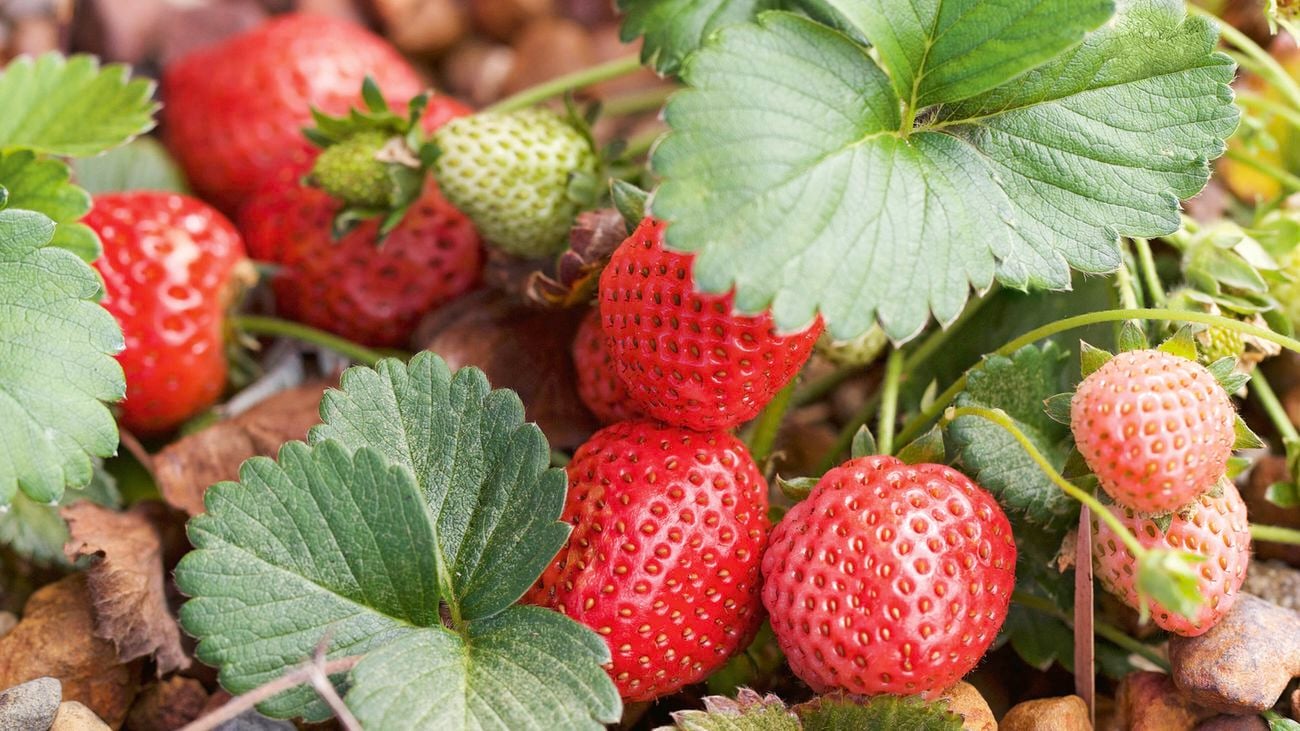
There is something special about tasting plants as you wander through a garden, whether it’s a leaf or two of refreshing mint or a sun-warmed orange straight from the tree. Strawberries are a great treat, especially if you have kids. They’re easy to grow in elevated beds or large pots, have fabulous visual and tactile foliage texture, and gorgeous little flowers followed by lush fruit (use netting to protect berries from birds).
5. Sound
You may hear wind gently rustling leaves but there are other ways to enhance a garden’s aural appeal. Increasing the density of plants in a garden increases the habitat for birdlife – and therefore a garden filled with birdsong! “Feeding birds will add to the atmosphere and experience,” suggests Xanthe. “Choose plants such as kōwhai or try a bird feeder. A bird bath is a simple but wonderful way to activate a garden.”
Water features are another way to incorporate sound. “Water is an important element to sight, touch and smell as well as our ears,” says Xanthe. “Think about how you might be able to capture gutter rain by running it down a rain chain instead of a pipe.”
What plants are best for a sensory garden?
Enticing edibles
● Basil
● Blueberry
● Feijoas
● Mandarin
Hero hedges
● Coprosma
● Pittosporum
● Red Robin
● Viburnum
Great groundcovers
● Corsican mint
● Dwarf mondo grass
● Creeping thyme
● Coprosma
Super stars
● Bay tree
● Cabbage tree
● Mānuka
● Rose

Keep in mind...
Take care when selecting your plants, as some can be poisonous to children and pets, and check their suitability for your area, as some may be classified as weeds in certain regions.
Want to get the kids involved?
Discover the best ways to get your kids in the garden.
Photo credit: Adam Woodhams, Adobe Stock.

Suggested products


$5.93
In-store only


More D.I.Y. Advice


Get inspired by projects from the Bunnings Workshop community
Health & Safety
Please make sure you use all equipment appropriately and safely when following the advice in these D.I.Y. videos. You need to be familiar with how to use equipment safely and follow the instructions that came with the equipment. If you are unsure, you may feel it is safest to consult an expert, such as the manufacturer or an expert Bunnings Team Member.
Grave health hazards are linked to asbestos, which may be in homes built up to 1990. Health hazards may result from exposure to lead-based paints in older materials and copper chromium arsenic (CCA) treated timber. For information on the dangers of asbestos, lead-based paint and CCA treated timber and tips for dealing with these materials contact your local council's Environmental Health Officer.
Please make sure you use all equipment appropriately and safely when following the advice in these D.I.Y. videos. You need to be familiar with how to use equipment safely and follow the instructions that came with the equipment. If you are unsure, you may feel it is safest to consult an expert, such as the manufacturer or an expert Bunnings Team Member.
Grave health hazards are linked to asbestos, which may be in homes built up to 1990. Health hazards may result from exposure to lead-based paints in older materials and copper chromium arsenic (CCA) treated timber. For information on the dangers of asbestos, lead-based paint and CCA treated timber and tips for dealing with these materials contact your local council's Environmental Health Officer.